As a functional consultant, you must understand how to prepare your customer’s data for migration, work with data management, and perform user acceptance testing to go live with finance and operations apps.
When it’s time to migrate data, the more you know, the easier it is to control operational complexity, and reduce costs. Your customer’s business continuity must be your priority. In this module, you will learn how to prepare data for a successful migration, by identifying important factors such as legacy systems, static, and common data.
Introduction
When it’s time to migrate data, the more you know, the easier it is to control operational complexity, and reduce costs. Your customer’s business continuity must be your priority. In this module, you will learn how to prepare data for a successful migration, by identifying important factors such as legacy systems, static, and common data.
In this module, you will learn how to:
Choose a data integration (import/export) strategy.
Identify common migration scenarios and tools in finance and operations apps.
Work with the Bring your own database (BYOD) feature.
Identify relevant (legacy) systems.
Identify and import static data that is common between industries.
Create and review test plans for data migration.
Identify and extract source data.
Identify relevant data entities and elements.
Generate field mapping between source and target data structures.
Perform a test migration and validate output.
Support the transition between the existing and migrated systems.
s a Business Applications Solution Architect specializing in Dynamics 365, expert-level proficiency is required:
Master end-to-end functional capabilities across D365 Finance & Supply Chain Management and Customer Engagement (CRM), with vertical industry business process expertise;
Advanced command of Power Platform suite, underlying D365 technical framework, low-code extension boundaries and ALM governance;
Expert knowledge of Azure cloud infrastructure, cross-system integration patterns, data migration, multi-environment deployment and upgrade strategies;
Enterprise architecture design capability to balance business requirements, standard product features, implementation cost, timeline, scalability and compliance risks, deliver end-to-end solution blueprints for large enterprise rollouts;
Hold Microsoft Expert-level certifications (MB-700 / PL-600) with 5+ full-lifecycle Dynamics 365 implementation experience.
⚠️ERP Design Technique: Where Projects Are Won… or Quietly Destroyed:
ERP is not configured. It is designed. And design is not about system. 👉It is about how your business will run tomorrow.
What is the Design Phase (Real Meaning) The design phase is NOT: – Drawing flow diagrams – Copying current processes – Listing screens & fields
The design phase is: – Translating business strategy into executable ERP processes
It answers: – How will we operate tomorrow? – What will we stop doing? – What will the system control? – What decisions will be automated?
Why Design Phase is So Critical Once design is locked: – 80% of ERP outcome is already decided
If design is weak: – Configuration becomes messy – Customizations increase – Costs go up – Timelines slip – Business loses trust
If design is strong: – ERP stays standard – Deployment is faster – Adoption is smoother – KPIs improve
What MUST Be Included in Design – End-to-end business processes (O2C, P2P, Plan → Produce) – KPI alignment (OTD, Inventory, Margin, Cycle Time) – Clear roles & ownership – Decision logic (who decides what & when) – Exception handling – Data ownership & governance – Integration touchpoints – Business rules (approval, control, limits)
Design = Business + KPI + Control + Ownership
What You MUST EXCLUDE (Biggest Mistakes) – “Nice to have” features – User personal preferences – Copy-paste of legacy system – Early customization decisions – Reports without business purpose – Over-detailed technical design
If you include everything… you will deliver nothing.
The Brutal Truth Most ERP designs fail because: – Business is not involved – Consultants don’t challenge – Leadership wants everything – No KPI ownership
So design becomes: – Documentation exercise… not transformation
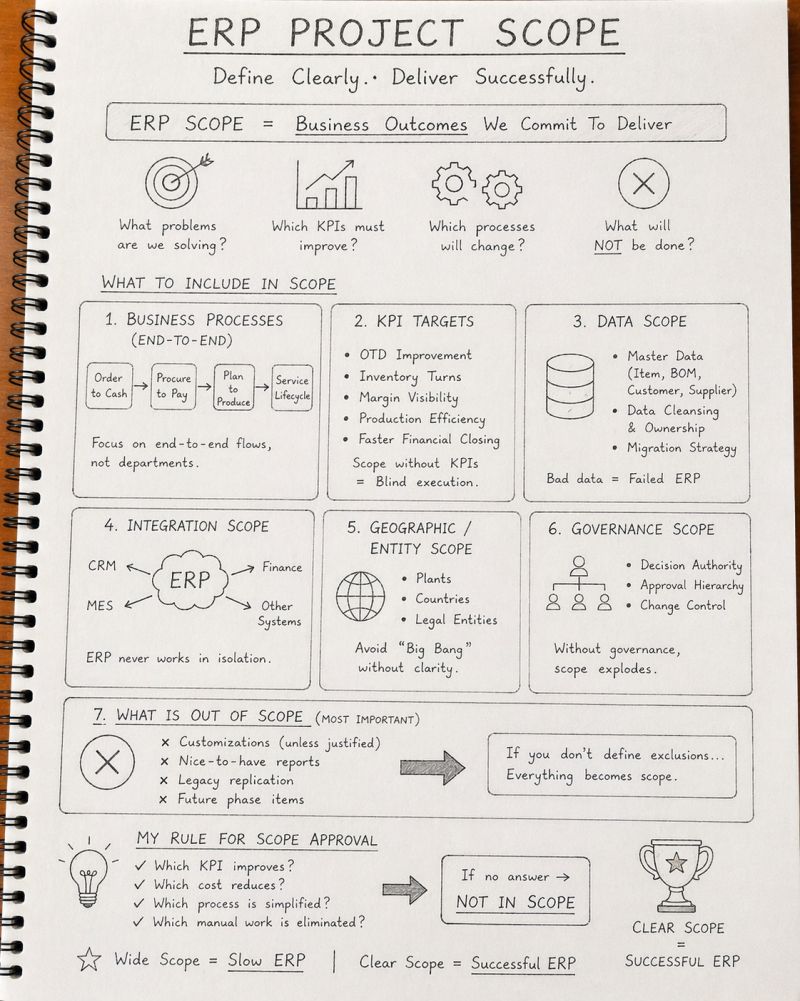
My Design Principle Before approving any design, I ask: Which KPI improves? Which cost reduces? Which manual step is eliminated? Who owns this process? If there’s no clear answer… 👉It doesn’t go into design.
If you’ve ever scratched your head wondering what sets discrete and process manufacturing apart, you’re not alone. It’s a topic that comes up frequently in the world of Dynamics 365 Finance & Operations (D365 F&O). Hopefully after reading this blog, you’ll finally understand the differences. I’ve also slightly included setup / using production differences just in case that helps anyone out there.
Discrete vs. Process Manufacturing: What’s the Difference?
Discrete Manufacturing is all about making individual items or units—think cars, electronics, or furniture. The production is usually assembly-based, with each item produced separately and tracked by serial or lot numbers.
Process Manufacturing, on the other hand, deals with products that are made in bulk through a chemical or physical transformation process, such as food, chemicals, or pharmaceuticals. Here, the end product cannot be easily disassembled back into its raw materials. It’s more about recipes and formulas than assembly instructions.
Discrete Manufacturing Setup in D365 F&O
Setting up discrete manufacturing in D365 F&O involves a few critical configurations:
Bill of Materials (BOM):
The BOM outlines all the raw materials, sub-assemblies, and parts needed to create the final product. It’s a hierarchical structure, allowing for complex multi-level assemblies.
You’ll define BOM versions to manage product variants or updates, tracking each change to ensure precise manufacturing.
Routing:
Discrete manufacturing relies on routings, which define the sequence of operations and work centers (e.g., machining, welding, assembly). This helps track the time, resources, and costs associated with each step.
You can use job scheduling to plan the specific dates and times each production job will occur, ensuring alignment with inventory availability.
Production Orders:
In D365 F&O, production orders are created and tracked for each batch or unit. These orders drive the manufacturing process, allowing you to control, monitor, and adjust production as needed.
You’ll have visibility into each step of the process, making it easy to track labor and material costs.
Process Manufacturing Setup in D365 F&O
For process manufacturing, D365 F&O offers specialized features tailored for continuous or batch-based production:
Formulas:
Instead of BOMs, you work with formulas. These include ingredients and their quantities, along with co-products and by-products that might be generated during production.
The formula versioning in D365 F&O allows you to adjust ingredient ratios or switch out raw materials based on availability.
Batch Orders:
Batch orders replace production orders here, focusing on mixing, blending, or chemical processing.
You can specify batch sizes and manage yield calculations, ensuring consistent output regardless of raw material variations.
D365 F&O also tracks the batch attributes, such as potency or chemical properties, which are crucial for industries like pharmaceuticals or food production.
Resource Management:
Resources are defined to manage equipment, reactors, and tanks needed in process manufacturing. These resources often have specific capacities, making it critical to manage production constraints.
Process cells and resource groups help control production flow, making sure you don’t exceed the physical or chemical limitations of your setup.
Can You Use Both in a Company?
Absolutely! In fact, many companies have hybrid production environments where they leverage both discrete and process manufacturing to optimize their operations. Here’s how it can work:
Example Scenario: A company might manufacture both electronic devices (discrete) and the chemicals needed for their batteries (process). In this case, they can set up separate production areas in D365 F&O, each tailored to their respective requirements.
Key Considerations:
Inventory Management: Use item model groups to distinguish between discrete items and process-related materials. This way, D365 F&O knows whether to track by serial numbers or by batches.
Costing Methods: Discrete manufacturing typically uses standard costing or FIFO for item valuation, while process manufacturing might lean towards weighted average costing due to continuous blending.
Product Variants: With proper configuration, you can have different product variants that are processed differently. This allows for streamlined reporting and analytics, even when processes diverge.
By leveraging the flexibility of D365 F&O, companies can optimize their workflows and minimize manual interventions between discrete and process setups, allowing for seamless integration of both manufacturing types.
Industries Using Discrete Manufacturing
Automotive:
Car manufacturers build vehicles using components like engines, seats, and electronic systems. Each component has a unique BOM, and production orders track the assembly process down to the individual vehicle.
Electronics Manufacturing:
Companies making smartphones or computers rely on highly detailed BOMs and routing to ensure each unit meets quality standards. Serial numbers are used to track each device.
Aerospace:
Aircraft manufacturers build complex machines using thousands of parts. Discrete manufacturing helps manage the assembly of engines, avionics, and other components, ensuring precise tracking and compliance with safety standards.
Industries Using Process Manufacturing
Pharmaceuticals:
Drug manufacturing relies on specific formulas and stringent quality control to produce consistent batches of medication. Batch orders in D365 F&O allow for tracking of active ingredients and potency.
Food & Beverage:
From brewing beer to producing packaged snacks, food manufacturers rely on formulas to create products. The ability to manage co-products (like spent grains in brewing) and track batches for quality control is crucial.
Chemicals:
Chemical companies produce bulk quantities of products like cleaning agents, paints, and solvents. D365 F&O helps manage formulas, track chemical properties, and ensure compliance with safety standards.
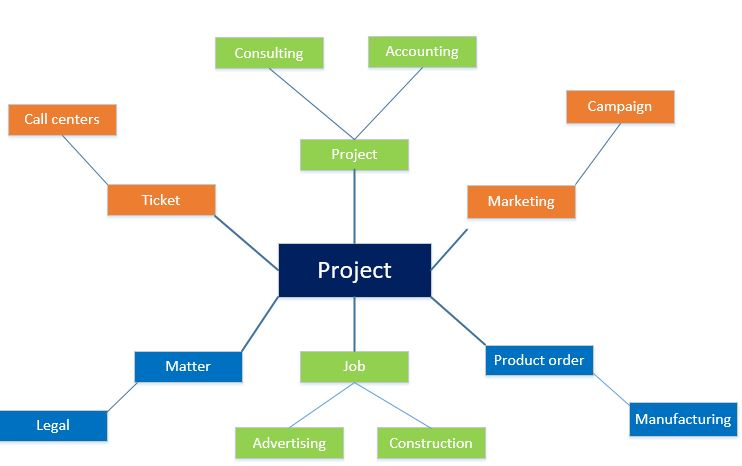
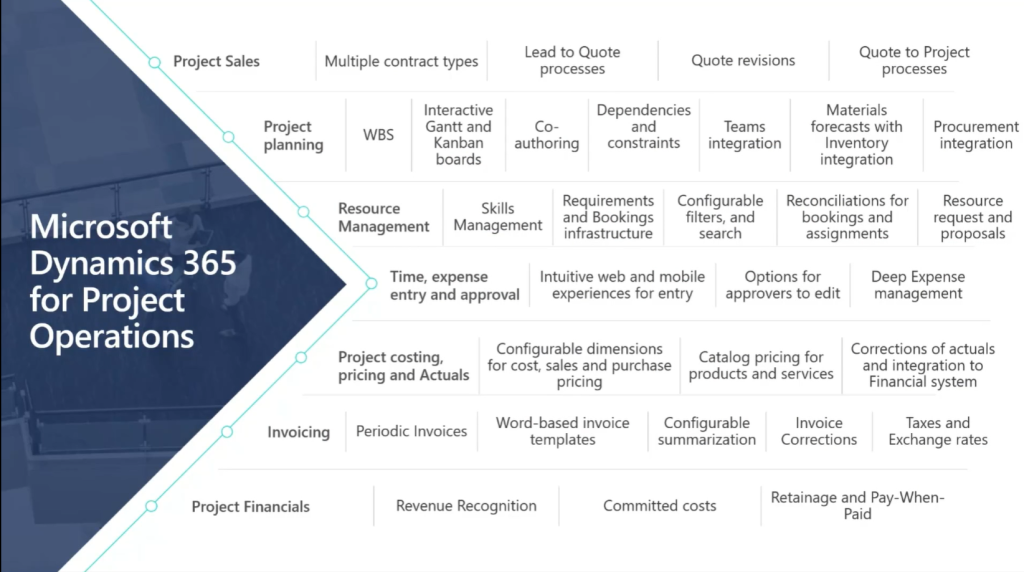
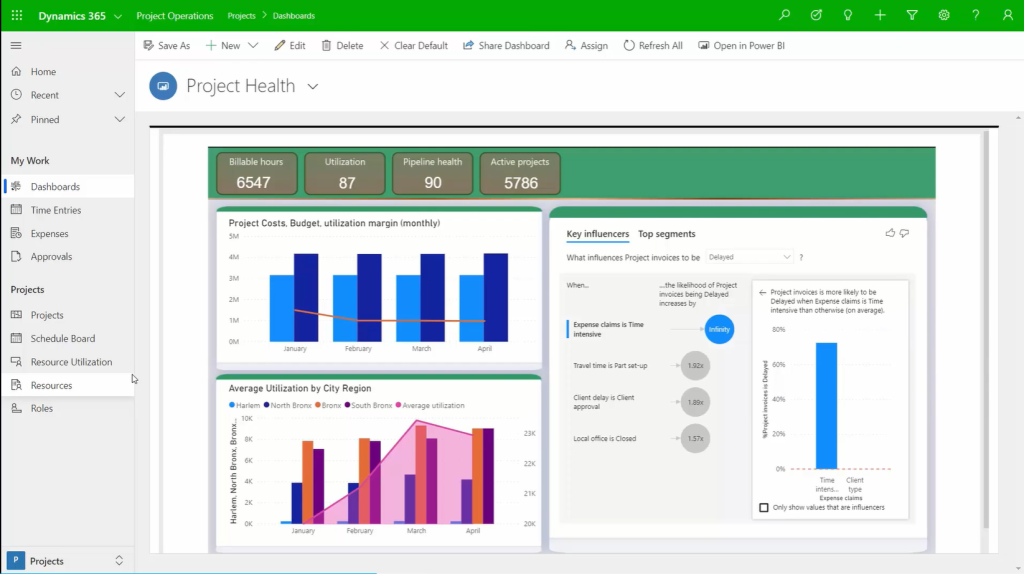
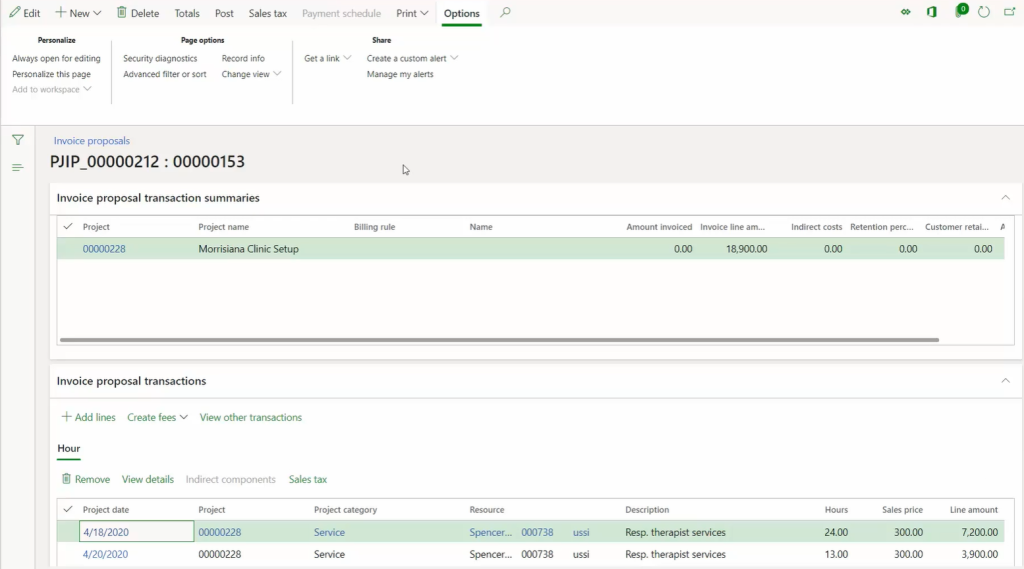
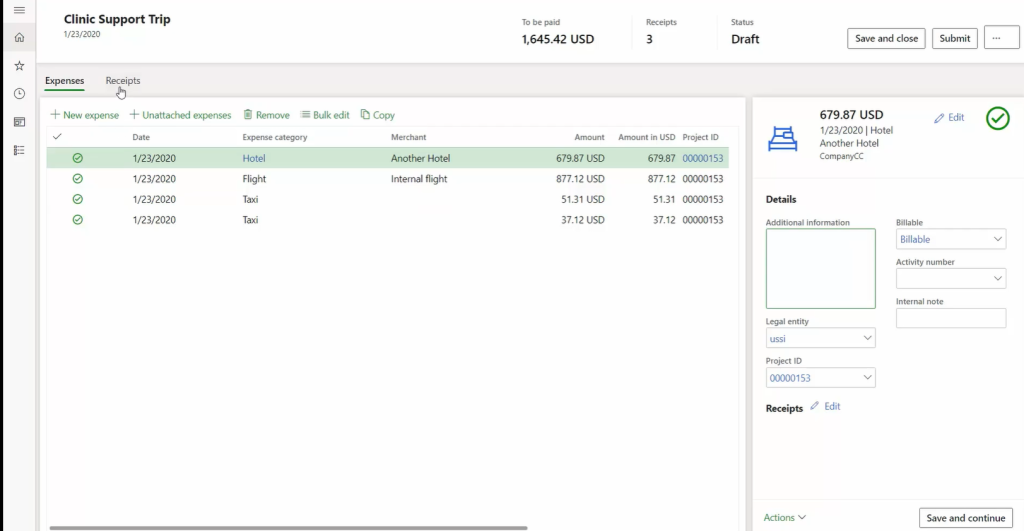
The project management and accounting functionality can be used in multiple industries to provide a service, produce a product, or achieve a result.
A project is a group of activities that is designed to provide a service, produce a product, or achieve a result. Projects consume resources and generate financial results in the form of revenues or assets.
Projects across industries
The project management and accounting functionality can be used in multiple industries, as shown in the following illustration.
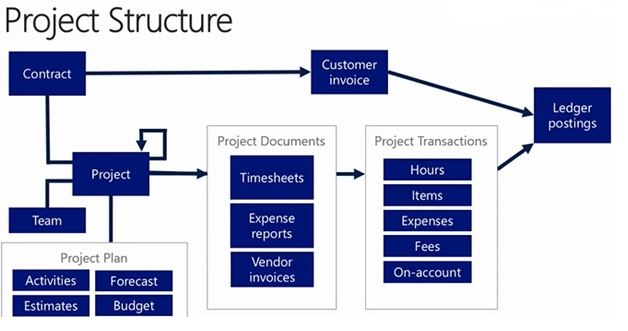
Initiate the project
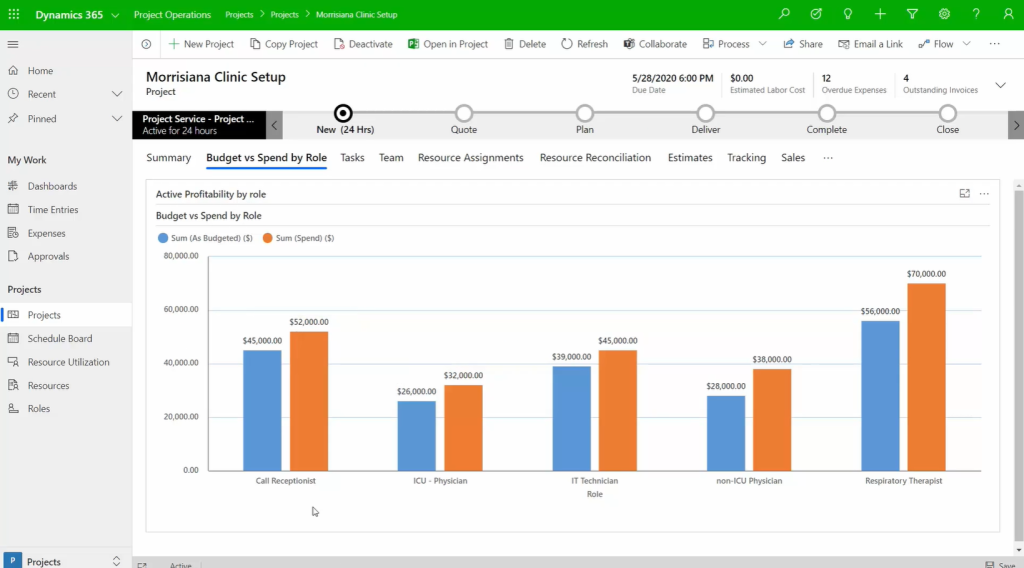
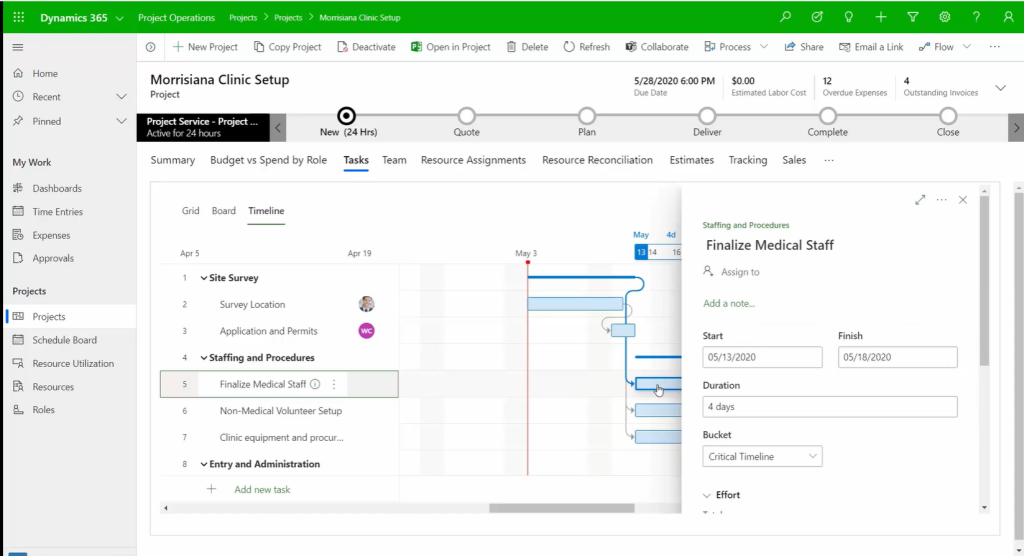
During project initiation, several key processes occur. You can use a project quotation to communicate the estimated labor, expenses, and materials to the customer. You can record the billing terms, limits, and agreements in a project contract. You can use a work breakdown structure (WBS) to plan and estimate the work. You can set up forecasts and budgets to guide the project execution. The following illustration shows the structure of a project.
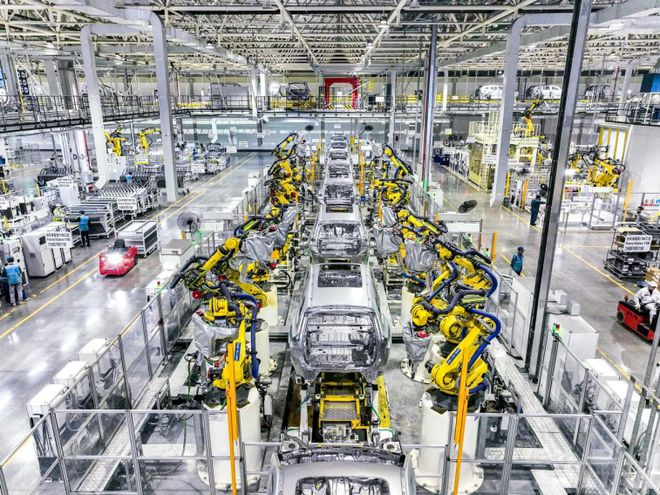
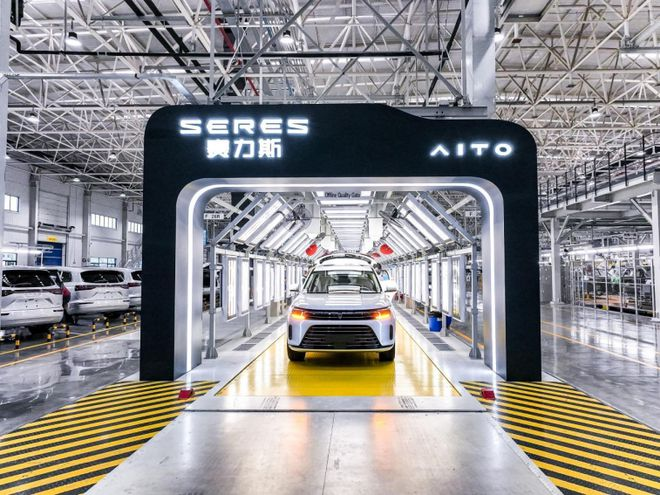
The smart factory is a concept used to describe the application of different combinations of modern technologies to create a hyperflexible, self-adapting manufacturing capability. Smart factories are an opportunity to create new forms of efficiency and flexibility by connecting different processes, information streams and stakeholders (frontline workers, planners, etc.) in a streamlined fashion.
Smart factory initiatives might also be referred to as “digital factory” or “intelligent factory.”
WHAT IS END-TO-END DIGITAL TRANSFORMATION SOLUTION
“Digital transformation” isn’t just a buzzword anymore.
Some companies treat it as a buzzword and nothing more. They talk about digital transformation without having any real digital transformation initiatives. These are likely the same companies that talk about their “disruptive technologies” that aren’t disrupting anything.
But an increasing number of businesses are recognizing the value proposition of digital transformation. They’re putting meaningful resources into actual digital transformation projects.
We’ve discussed digital transformation at length in this space. If you’re just joining us, we define “digital transformation” as…
The process of organizational change brought about by the use of digital technologies and business models to improve performance.
It’s not just about taking paper documents and putting them online—it’s about reimagining business processes in a digital world.
Digital transformation isn’t easy. It’s hard enough to improve a business process without developing a digital solution to implement it. But for companies that adopt it early and get it right, digital transformation can provide a competitive advantage by enabling them to deliver products and services faster, with higher quality and lower costs.
The more components of a business process that can be digitally transformed, the better. More companies are adopting a goal of end-to-end digital transformation: Applying digital transformation to all phases of a given business process.
Xiaomi is a China-based electronics manufacturer that has increased in worldwide popularity thanks to its line of mobile phones, tablets, and smart-home devices that it sells in more than 100 markets. As Xiaomi began expanding into overseas markets, it used siloed service tools and channels instead of an integrated service platform. This created challenges with providing a consistent customer service experience across countries, consolidating processes to support a fast global expansion, and accurately tracking spare parts. To gain a modern and integrated service experience, Xiaomi adopted Dynamics 365 Customer Service, Power Platform, Power Virtual Agents, and D365 Supply Chain Management. Using this combination of products, Xiaomi is now able to provide a comprehensive omnichannel experience for customers with live chats, customer calls, and email.
Growing around the world
Xiaomi is focused on being the most user-centric mobile internet company, with a vision to “make friends with users and be the coolest company in the users’ hearts.” The company aims to constantly exceed expectations through innovations with its mobile phones, tablets, and smart-home devices. Since its start in 2010, Xiaomi has grown rapidly, delighting the online following “Fans of Xiaomi” in China by expanding from mobile to IoT and developing its electronics markets overseas. The company made the Fortune Global 500 list for the fourth time, a ranking of 266—up 72 places compared to 2021. Xiaomi now has presence in more than 100 regions and countries, and its smartphone sales ranks within the top five in 62 global markets.
Making do with siloed tools
As Xiaomi experienced rapid growth and expansion, its self-developed, fragmented customer service system struggled to keep up with the massive demand for human resources and time. The system’s third-party apps were completely independent of one another, meaning that users needed to manually communicate information via phone and instant messaging tools. Customer service teams received customer requests from different channels, queried information in different systems, and then returned to the corresponding channel system for feedback.
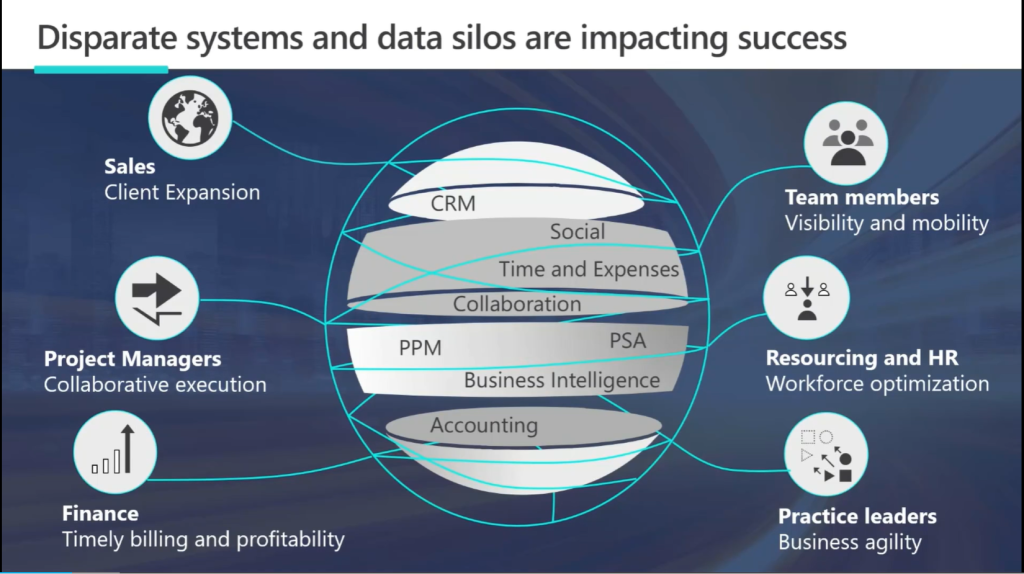
Xiaomi was also seeking to improve visibility across its global post-sales supply chain for spare parts. Spare parts are crucial for product repairs, and being able to forecast the availability of parts helps Xiaomi estimate how long a repair might take. But Xiaomi didn’t have a unified data platform for tracking and managing parts, and its existing processes were heavily manual and required employees to have extensive and specialized knowledge of historical data. And, like the customer service system, the absence of integration among systems resulted in a lack of real-time information sharing.
“When starting this project, we needed to solve how to complete the docking with dozens of internal and external systems in six months, while considering the different usage habits of users around the world, and finally provide a unified, efficient and smooth experience,” says En Yang, IT Director at Xiaomi. “Most importantly, we needed to comply with local laws and regulations in the global implementation process.”
Improving internal processes
Xiaomi turned to Microsoft to replace its disparate system and build a unified customer relationship management (CRM) platform on Dynamics 365 Customer Service with some components of Power Platform and Dynamics 365 Supply Chain Management. “The Xiaomi team aimed to establish an efficient customer and post-sales management system. With the help of the lightweight PaaS service from Azure, the system can quickly connect with other business systems,” says Guijun Zhao, Chief Architect at Xiaomi. The switch from the self-developed customer service system to Microsoft Dynamics 365 Customer Service took half a year of demand research, solution design, development, and launch.
Xiaomi used Power Apps to create an app used by the front line to directly interact with customers and Power Virtual Agents for its AI service bot that handles general questions from customers. Dynamics 365 components include Customer Service for a unified system and better customer service agent experience, and Supply Chain Management for the overall spare parts supply chain.
Additionally, Xiaomi uses Azure Functions and Azure API Management to securely connect third-party business systems to internal business systems, and Azure Translator to quickly generate product manuals in multiple languages.
The new international customer service system supports multi-language capabilities, compliance, and unified management levels.
Building a comprehensive experience
Despite the huge obstacles brought by the outbreak of COVID-19, Xiaomi launched the new Dynamics 365 and Power Platform-backed customer service system globally in 2022. “In this project, Microsoft, as a software product provider, participated in the implementation process of the project from many aspects such as architecture design, security assessment, and best practices,” says Haiqiang He, Chief Architect at Xiaomi. “After the project is launched, it will continue to provide technical capabilities to help Xiaomi team improve its technical capabilities.” The new system has covered 34 countries and supported 19 languages, and the post-sales services have reached 80 countries and 10 regions. The spare parts system supports over 40 warehouses and 700 multi-level branch organizations in the world.
With Dynamics 365 Customer Service, the company has gained a unified workbench for multiple communication channels (online, email, social media) and for financial processes, data integration, and security authentication. Dynamics 365 Supply Chain Management helps employees provide an end-to-end spare-parts management system for pull-through planning and execution. The new system includes interoperability with peripheral systems like post-sales service and financial system settlement. It can also display the comprehensive online history of materials and processes, visualize the current inventory, and actively monitor and manage inventory levels in real time.
For now, Xiaomi is excited to add a unified customer service approach and enhance its global spare-parts supply to further its mission of exceeding customer expectations with fast deployment through Dynamics 365 and Power Platform. Mike Wan, Senior Manager at Xiaomi says, “Now, with the out-of-the-box features and flexible, open framework from Dynamics 365, the customer service teams can access multi-channel customer messages on a uniformed platform and handle them in a timely manner, creating an end-to-end, visual closed-loop management.”